
Buffalo Leather Belt Selection Guide: Texture, Usage, and Style

When choosing a buffalo leather belt, the deciding factor is not just the name of the leather, but how well the belt suits its use and your style. A textured surface and durability may be among the reasons you prefer buffalo leather; however, width, color, and the belt's construction also matter for everyday use. Distinguishing what this information means when comparing the material and craftsmanship descriptions on product pages will make it easier for you to choose.
In this guide, we will cover the main differences between buffalo and cowhide, as well as width and color selection based on intended use. We will also explain what to look for in the belt's construction and what the product information tells you. Noppa's black and brown men's belt options come in widths of 3.5 cm, 4 cm, and 4.5 cm. You can compare these measurements with your pants' belt loops to choose the right model for everyday jeans or a more classic look. You can also compare the options handcrafted in the workshop in Gerede, Bolu, based on their main features.
Key Takeaways
- When choosing a buffalo leather belt, evaluate the product's construction and intended use alongside the type of leather.
- Read the material and craftsmanship descriptions together; the name of the leather alone does not guarantee quality or lifespan.
- Do not assume that buffalo leather is definitively superior to cowhide; base your decision on the product information and how you plan to use the belt.
- Determine whether you will use the belt for everyday or classic wear, and compare the belt's width with your pants' belt loops.
- Review Noppa's black and brown men's belt options in 3.5 cm, 4 cm, and 4.5 cm widths according to their measurements.
What is a buffalo leather belt, and who might it be suitable for?
A buffalo leather belt is an accessory made from natural buffalo leather that not only secures your pants but also completes your outfit. When choosing, do not focus solely on the type of leather. Evaluate the surface appearance, the belt's width and construction, the information in the product description, and the craftsmanship together. The name of the leather alone does not guarantee quality or lifespan.
To better understand the raw material of buffalo leather, you can view general information about water buffalo. However, the animal type does not indicate how the leather is processed or what kind of construction the belt has. Evaluate these features through the product information and craftsmanship details.
What features stand out in a buffalo leather belt?
Read the information in the product description separately. The material description explains the type of leather, the width measurement indicates how well the belt fits your pants' belt loops, the color appearance shows how it looks, and the construction information explains how the belt is made. In Noppa's buffalo leather belts, the material information specifies genuine buffalo leather for each product. You can compare the black and brown color options along with the 3.5 cm, 4 cm, and 4.5 cm widths.
Natural texture describes the surface appearance; it is not a guarantee of durability or long-term use on its own. In addition to the texture, look at how the edges, stitching, and the belt's overall construction are described in the product description. Noppa products are handcrafted in the workshop in Gerede, Bolu. This information explains the method of production, but the type of leather alone does not make it a measure of quality.
Is a buffalo leather belt suitable for everyday use?
Suitability depends on which pants you wear the belt with and how often you use it. If you wear jeans, first measure the width of your pants' belt loops or compare them with the belt you currently use. You can use Noppa's 3.5 cm, 4 cm, and 4.5 cm measurements in buffalo leather options for this comparison. While black offers a simple look, you can evaluate brown based on how well it matches the other colors in your outfit. These are style preferences and do not make a definitive judgment about performance.
It is important that the belt you use daily passes easily through your pants' belt loops and matches the clothes you wear often. When pairing it with jeans, do not look only at the term "everyday"; also check the width and construction information in the description. If you are looking for a more classic look, consider the product's intended use; the name of the material alone does not make a model classic or everyday. This way, you can determine the option that suits your clothing habits more consistently.
How do you evaluate leather, construction, and craftsmanship when buying a buffalo leather belt?
When reading the product description, first look at how the material is defined, then how the belt's construction is described. The term "genuine buffalo leather" indicates the type of leather; it does not explain on its own whether the product is layered or single-piece, or what material the buckle is made of. Evaluate these details separately and do not use one piece of information in place of another.
The resource titled Characteristics and Uses of Buffalo Leather, prepared by the FAO on buffalo production and uses, provides general information about the origin of the raw material. When choosing a belt, consider this information along with the material and construction descriptions in the product description. General information does not indicate the craftsmanship of a specific product on its own.
How do you interpret the term "genuine buffalo leather" in product information?
Base your decision on the material description on the product page. "Buffalo leather," "cowhide," and "synthetic leather" are different material descriptions and cannot be used interchangeably. The term genuine leather also does not provide information on its own about the belt's width, number of layers, buckle type, or craftsmanship details. When comparing buffalo leather belts, evaluate each feature in the description under its own heading.
What do single-piece, layered, and buckle information tell you?
If the construction is specified as "single-piece" in the product description, read it as a product description of how the belt is made; do not consider it automatic proof of quality or durability. For example, one of Noppa's black, 4 cm wide models is described as single-piece buffalo leather. This information helps you compare it with the construction of other models. If the buckle material is included in the description, make a separate note of it as well.
The product photo gives the first impression, but it is not sufficient for a definitive evaluation on its own. Review the image along with the product description. Pay attention to the neatness of the stitching and the surface appearance; the lighting and angle in the photo can change the appearance of these details. Instead of drawing a conclusion from a single feature, compare the following points together:
- Material: Is buffalo leather, cowhide, or another material specified?
- Construction: Is the product described as single-piece or layered?
- Craftsmanship: How are the stitching and edge appearance conveyed in the description?
- Buckle and measurement: Is the buckle material specified, and does the width suit its intended use?
These headings allow you to read product descriptions using the same criteria. One product may highlight a natural surface texture, while another may highlight construction or measurement information. Which is the priority for you depends on which pants you will use the belt with. By comparing the details using these criteria, you can review men's leather belt options more consciously.
How do you choose between a buffalo leather belt and a cowhide belt?
Comparing the two belts solely by leather type is not enough to find the model that suits your use. Evaluate the material name in the product description along with the belt's width, construction, color, and intended use. Do not assume that buffalo leather is better or will last longer than cowhide in every case. The information provided on a product basis bases your decision on concrete criteria.
Noppa offers buffalo leather jeans belts and cowhide belt options for classic wear. This distinction does not mean that each material can only be used for a single type of clothing. Compare the product's intended use and measurements with your own pants.
For what use should you evaluate a buffalo leather belt?
For jeans and everyday pants, look at the buffalo leather models designated for this use in the product description. For example, you can compare the 4.5 cm black jeans belt with the 4 cm black sport-classic model in terms of their widths and stated styles of use. Also consider whether the belt will pass through your pants' belt loops. The width measurement makes your choice more concrete not only in terms of appearance but also in terms of compatibility with your pants.
The 4.5 cm measurement offers a different width than the 4 cm measurement; however, it does not determine on its own which model is more suitable. Think about the gap between your jeans' belt loops and how often and with which pants you will wear the belt. Pay attention to whether the product description includes terms for everyday, jeans, or sport-classic use. Base your decision more on how this information matches your own needs than on the name of the material.
In what situation can a cowhide belt be preferred?
For classic fabric pants, you can evaluate the cowhide belts designated for this use in the product description. Noppa's 3.5 cm wide black or brown classic cowhide belts are examples of these products. Make your color selection based on the harmony you create with your pants and shoes. Here too, the type of leather is not the only criterion; width and intended use are also part of your decision.
To make the comparison easier, note the information on the product pages in the same order. For example:
- 4.5 cm black buffalo leather jeans belt: Jeans use and stated width.
- 4 cm black buffalo leather sport-classic belt: Sport-classic use description and narrower measurement.
- 3.5 cm black or brown cowhide classic belt: Classic pants use and color alternative.
First, determine the measurement that fits your pants' belt loops. Then choose which option you are looking for: everyday jeans, a sport-classic match, or a classic look with fabric pants. This way, you can decide between a buffalo leather belt and a cowhide belt not based on general superiority claims, but according to the product's stated features and your clothing habits.
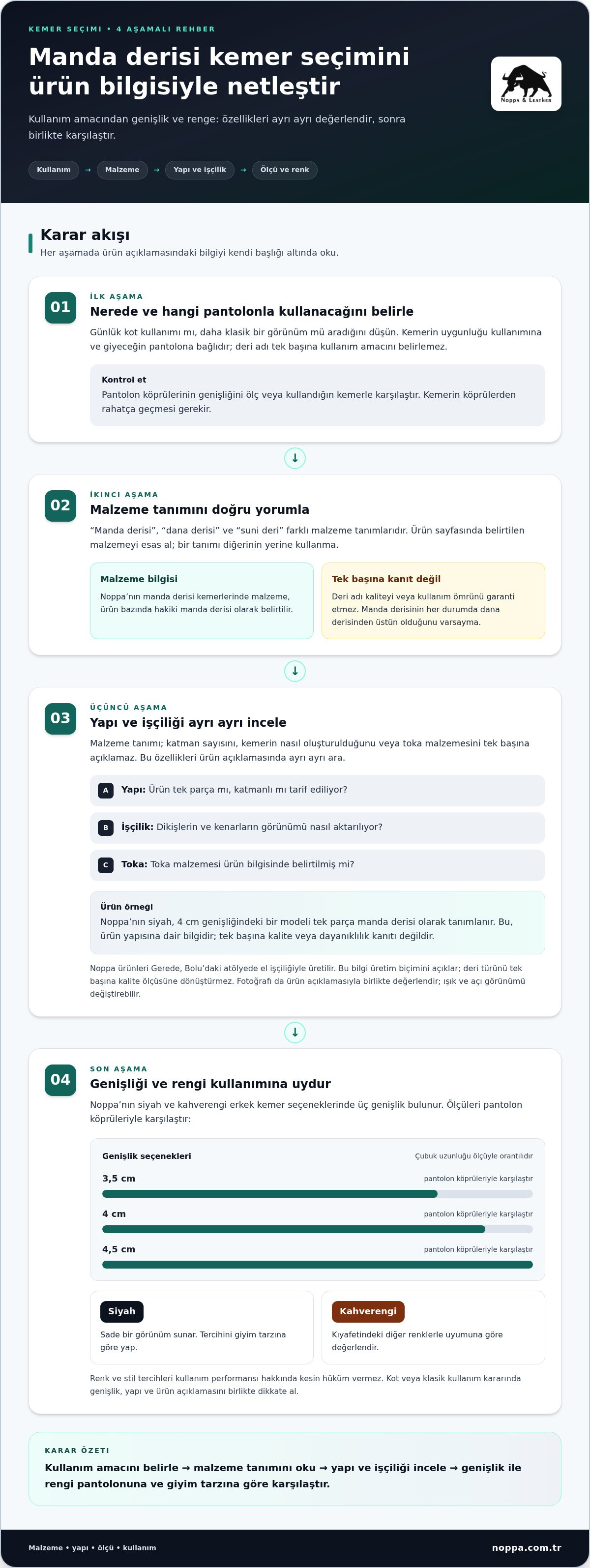
How do you choose a buffalo leather belt that suits your use?
First, determine which pants you will wear the belt with and its intended use. For the jeans you wear often, look at the models defined for jeans or everyday use. If you are looking for a classic look with fabric pants, compare the width and material information specified for classic use in the product description. This way, you will not have decided solely based on color or the name of the leather.
Then compare the belt's width with your pants' belt loops. If you have a current belt, you can measure its width and compare it with the measurement in the new model's product information. The belt should pass easily through the belt loops; do not choose it solely because it looks wider or thinner. Size is a separate matter. Follow the steps in the belt measurement guide to determine your size, and do not confuse the width measurement with your size measurement.
Width and construction selection for jeans
If you are looking for a more pronounced width, you can evaluate the 4.5 cm black buffalo leather jeans belt. Compare it with the 4 cm single-piece black buffalo leather model as a narrower alternative. In either case, first look at the width of your pants' belt loops. If the belt does not pass through the loops, its appearance or material preference will not change its compatibility with your use.
When choosing between the two models, base your decision on the use description and construction information provided in the product description. The model defined as a "jeans belt" and the model stated as single-piece offer different information; do not consider one of these definitions superior to the other. Width, compatibility with your pants, and the look you are seeking will help you decide together.
Color and width selection for fabric pants
For the belt you will use with classic fabric pants, review the options defined as classic in the product description. For example, the 3.5 cm black or brown classic cowhide belt is a different material option than the buffalo leather models. When choosing brown or tan tones, think about your pants and shoe colors together. The colors do not need to match exactly; it is enough that they look harmonious together.
In this selection, do not forget to compare the 3.5 cm measurement with your pants' belt loops. Width and material descriptions answer different questions: the measurement explains the belt's compatibility with your pants, while the leather information explains what material the product is made of. For the buckle as well, base your decision on the features specified on the product page; do not draw a definitive conclusion about the material or construction from the image.
Before deciding, consider your own use alongside the product information: Jeans or fabric pants? Everyday or classic? Which width is suitable and which color matches your wardrobe better? Review the men's buffalo leather belt options using these criteria and determine the model that suits your use.
Find the Noppa buffalo leather belt model that's right for you
When choosing a model, read the use description, material information, and stated width in the product name together. Do not match the model you are looking for for jeans with a belt that has a different use description solely by looking at their colors. In the examples below, each feature is limited to the information specified in the product name or description. Do not assume a measurement for models where the width is not specified; choose from the options in the product information that you can compare with your pants' belt loops.
Buffalo leather belt examples for jeans and everyday use
Men's Genuine Leather Belt Black Sport Jeans Belt 4.5 cm Genuine Buffalo Leather stands out with its black color, jeans use description, and 4.5 cm width. If you are looking for a narrower measurement, you can review the Men's Genuine Leather Belt Black Genuine Buffalo Leather 4 CM model; this model is defined for sport-classic use in the product description. When deciding between the two, first think about whether the pants' belt loops will easily accommodate the belt.
Genuine Leather Brown Men's Belt Sport Jeans Belt Single-Piece Buffalo Leather stands out from the other examples with its brown color, sport jeans use description, and single-piece construction information. Since the width is not specified in the product name, do not guess the measurement. Also consider how well the brown tone matches the pants and shoes in your wardrobe. Read the single-piece term as information describing the product's construction; do not consider it a guarantee of superiority or lifespan on its own.
Model comparison by color and classic use
The brown option offered under the name Genuine Buffalo Leather Men's Jeans Belt 100% Leather Belt is another example for those who want to evaluate jeans use and color preference together. Since the width information is not included in the product name, make the comparison based on the specified material, color, and type of use. You can evaluate black belts for simple matches, while brown can be evaluated based on how well it matches the tones of your outfit.
If you are looking for a classic look, pay special attention to the material distinction. The classic black, 3.5 cm wide belt is cowhide, not buffalo leather. Consider the classic use description, width, and black color in the product description together. This way, you will not look only at the "classic" appearance and overlook the material information.
- Jeans and a more pronounced width: Evaluate the black 4.5 cm buffalo leather jeans belt.
- Sport-classic use: Review the description of the black 4 cm buffalo leather option.
- Brown preference: Compare the single-piece jeans belt with the brown buffalo leather jeans belt based on their stated features.
- Classic pants: Evaluate the black 3.5 cm cowhide belt separately from the buffalo leather models.
Noppa belts are handcrafted in the workshop in Gerede, Bolu. After determining the use, color, and width criteria, review the men's leather belt options and compare the features in the product descriptions with your own needs.
Clarify your choice based on everyday use
When choosing a buffalo leather belt, let the pants you wear most often and the belt's place in your wardrobe determine the final decision. Match the measurement, color, and use information in the product description with your own needs. This way, you will choose not only based on its appearance, but according to the clothes you will actually wear.
Noppa belts are handcrafted in the workshop in Gerede, Bolu. You can compare the black and brown options, different widths, and types of use when reviewing the men's belt models. Shipping is available throughout Turkey; free shipping is offered on orders over 1500 TL.
If your measurement and use preference is clear, review the belts in the men's leather products collection. Compare the product information with your pants and choose the model that's right for you.
Frequently Asked Questions
Is a buffalo leather belt genuine leather?
At Noppa, the belts specified as buffalo leather in the product information are made from genuine buffalo leather. The material description does not explain the product's other features on its own. The belt's width, construction, color, and buckle information are separate details. When reviewing the product page, read the name of the material without confusing it with these features. This way, you can evaluate the type of leather and the belt's design features separately.
Is a buffalo leather belt water-resistant?
It cannot be claimed that a buffalo leather belt is waterproof or water-resistant; take care not to wet the leather. If it gets wet due to rain or spilled liquid, remove the moisture from the surface with a clean, soft cloth without pressing. Wait for the belt to dry on its own at room temperature. Instead of bringing it close to a heat source or leaving it in direct sunlight, allow it to dry naturally.
Can a buffalo leather belt be worn every day?
Yes, you can wear models designed for everyday use every day. For example, when choosing between the black 4.5 cm model intended for jeans and the black 4 cm model described as suitable for smart-casual wear, consider the width of your trousers' belt loops. The belt should pass through the loops comfortably. If you wear different trousers throughout the day, base your choice on how well it fits the type of trousers you wear most often.
Does a buffalo leather belt soften over time?
How the leather feels over time may vary depending on the frequency of use and storage and contact conditions. Therefore, it is not accurate to say that it will soften within a certain period or necessarily take on a specific shape. When not in use, store your belt in a dry, clean place; do not leave it folded or with weight on it for extended periods. This way, you will not expose the leather to unnecessary pressure and moisture.
How do you clean a buffalo leather belt?
To remove daily dust, gently wipe the surface of the belt with a soft, dry cloth. Avoid using excessive water, harsh chemicals, and rubbing the surface hard; these can affect the appearance of the leather. When a stain occurs, first treat it lightly with a dry cloth and do not apply pressure that will spread the stain. After cleaning, leave the belt in a dry, well-ventilated place.
How do you find the right size for a buffalo leather belt?
For the right size, review the size options and measurement description on the product page you selected. The width of the belt is not the same as the size measurement; consider the two separately when choosing a product. If you need steps on how to measure your size, refer to the belt measurement guide. The measurement of a belt you have used before and found comfortable can be helpful for comparison, but base your choice on the new product's own size information.


