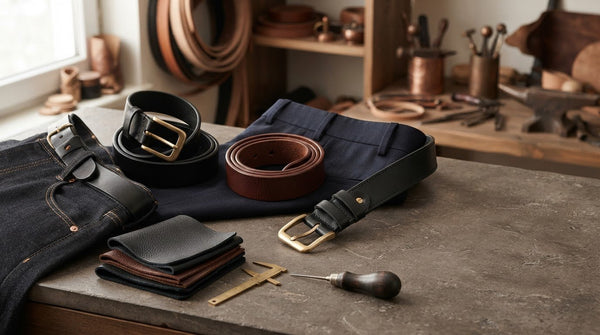
Men's Leather Belt Buying Guide: Material, Craftsmanship, and Making the Right Choice

Does a stylish-looking belt also meet your expectations for everyday use? When choosing a men's leather belt, looking only at the color and buckle is not enough. The type of leather, craftsmanship, and how often you will use the belt also determine your choice.
It can be difficult to compare material and production information on product pages. You need concrete information to understand the difference between types of genuine leather and to assess whether the belt will fit into your wardrobe. In this guide, we cover the selection process step by step, from determining your intended use to comparing product descriptions.
Below, you will find what to look for in product information about buffalo and cowhide, which details to examine when assessing craftsmanship, and how to choose the right belt for different usage habits. At Noppa's workshop in Bolu Gerede, men's leather belts are handcrafted from 100% genuine buffalo and cowhide. By evaluating the leather type, production information, and what clothes you will wear the belt with together, you can make the choice that suits your needs.
Key Takeaways
- Determine separately what you expect from the belt in terms of appearance and functionality for everyday use, the workplace, and special occasions.
- When choosing a men's leather belt, also consider how well it matches the pants and shoes you wear most often.
- Do not settle for the term "genuine leather"; examine the leather type, production process, and craftsmanship information together.
- When comparing products, look at the frequency of use, appearance, and how clearly the product information is presented.
- Clarify your preference by starting with the intended use and moving on to materials and craftsmanship. Use the separate size guide for size selection.
Determine your usage needs first when choosing a men's leather belt
Before choosing a belt, think about which days, pants, and how often you will wear it. For a belt you will wear every day, comfort, how well the appearance matches different outfits, and the information in the product description become important. For the workplace or special occasions, assess whether the belt matches the overall style of your outfit. Instead of considering a single criterion as decisive, take appearance, comfort, and production information into account together.
This approach helps you understand how useful the belt will be for you, rather than ranking options based on price alone. For basic information about leather type and processing, you can also consult a general resource on leather (material). Then return to your own habits: how often you will wear the belt and with which clothes you will wear it most will clarify your priorities.
Priorities for everyday use versus more classic use
For everyday use, consider that you will be taking the belt on and off frequently and pairing it with different outfits. Matching the pants in your wardrobe and clearly stating the product's material and production information are useful criteria for this use. For more classic choices, a simple appearance and matching the overall style of the outfit may stand out. For special occasions, also consider whether the belt's appearance is balanced with the rest of the outfit.
You do not need to stick to strict combination rules. Look at the overall balance the belt creates with your pants and shoes within your own style. When examining product images, look not only at the first impression but also at the material and production descriptions. The appearance should meet your approval; the product information should also help you assess your usage expectations.
Make your belt choice based on your wardrobe habits
Review the colors of the pants and shoes you wear most often. Having the belt match them can make it easier to wear it on different days. If you are looking for a single belt that will complement multiple outfits, base your choice on the colors and styles that appear most frequently in your wardrobe. If you are considering a more distinctive choice, determine in advance which clothes you will wear the belt with.
Size selection is also part of usage comfort; the steps for determining the correct size are covered in a separate size guide. Here, your priority should be the belt's place in your wardrobe and frequency of use. When evaluating men's leather belt options using these criteria, also include the material and craftsmanship descriptions on the product page in your decision.
- Frequent use: Prioritize the belt's match with your everyday outfits and the clarity of the product information.
- Work or special occasions: Assess its simple appearance and overall match with your outfit.
- Single belt preference: Consider the colors and styles that appear most frequently in your wardrobe.
This brief assessment allows you to define your needs from the start. This way, you will opt not only for a visually appealing model but also for an option that suits your daily habits and clothes. In your final decision, weigh appearance, comfort, and the craftsmanship information in the product description together.
Why are materials and craftsmanship important in men's leather belts?
The words "genuine leather" on a belt do not explain all the product's features on their own. This term provides information about the material; the type of leather, production approach, and craftsmanship should be assessed separately. Stating which leather is used and where and how the product is produced in the product description makes comparison easier. The more concrete the information, the easier it will be for you to understand what you are buying.
When examining craftsmanship information, pay attention to the belt's visible construction. Details such as the finishing of the edges, the neatness of the stitching, and the section where it meets the buckle give you an idea of the product's construction. If the photos do not show these points, evaluate the production method information in the description. These observations are not indicators of durability on their own; they should be considered together with the material and production information in the product description.
What you need to know about buffalo leather and cowhide
Noppa uses 100% genuine buffalo and cowhide in the production of men's leather belts. Clearly stating the leather type in the product information allows you to understand which material you are basing your preference on. Instead of assuming one type is more durable, softer, or has a different texture than the other, use the material information stated on the product page as your basis. Methods for distinguishing leather by its appearance are a separate topic that should be addressed separately.
View the term "genuine leather" as a starting point. Then see whether the animal type and production description are stated. The clarity of this information contributes to your decision as much as the belt's appearance. If you want to recognize leather types or distinguish genuine leather from different materials, you can use a dedicated genuine leather guide on this topic.
Handcrafted production in the Gerede workshop
Production by hand in a workshop describes the product's preparation approach. When making a choice, examine this term along with the brand's production location and the materials it uses. Workshop information allows you to understand which manufacturer the product belongs to and where production takes place. This way, you can evaluate the material and production descriptions together.
Noppa produces men's leather belts by hand in its own workshop in Bolu Gerede. Presenting the buffalo and cowhide information together with the workshop information provides concrete information about the manufacturer and material. When examining the product, consider these descriptions together with its appearance and usage needs; make a choice based on clear material and production information rather than general adjectives.
- Material: Examine whether the leather type is clearly stated.
- Craftsmanship: Look at the edge, stitching, and connection details in the product photos.
- Production information: Pay attention to the workshop and production approach being clearly explained.
When examining Noppa's men's leather belt options, you can evaluate the material and workshop information together with the product's appearance.
What to look for when comparing men's leather belt styles
When evaluating products side by side, use the same criteria for each model. You may like the appearance of one model; however, also consider whether it matches your frequency of use, the stated material, and the production information. If the information in the product descriptions is presented in different ways, the following table makes comparison more organized. Look for the information that best meets your needs in each row.
| Decision criterion | Look for in the product description | Ask yourself |
|---|---|---|
| Frequency of use | Is the intended use of the belt stated? | How often and with what clothes will I wear this belt? |
| Appearance | Do the photos clearly show the belt's overall appearance? | Does the appearance match the pants in my wardrobe? |
| Material information | Is the leather type clearly stated? | Do I know which material I prefer? |
| Craftsmanship transparency | Is information provided about the production location and craftsmanship? | Can I understand how the product is made? |
What information to compare in the product description
First, read the material description. Stating the leather type alongside the term "genuine leather" makes it easier to understand what material the product is made of. Information about the production location and craftsmanship also completes the description. If the text consists only of general adjectives, take into account that you have less concrete information when making your decision.
Do not assume features that are not stated. If the product description does not include size, buckle type, or care information, do not attribute these to the product based on similar models. Buckle types and selection criteria are a separate topic; keep the focus on material, usage, and craftsmanship descriptions in this comparison.
Balance appearance, usage, and craftsmanship
Images help you assess the belt's color and overall style; they do not explain how the product is made on their own. Therefore, examine the photos together with the material and production descriptions. For example, if you will wear the belt several times a week, emphasize not only its eye-catching appearance but also its match with your wardrobe and the clarity of the product information.
A good product description clearly states the materials used and the production process.
In your comparison, do not make a feature that does not serve your usage habits a decisive criterion. First, review the necessary information according to the table, then weigh appearance and usage compatibility. This way, your choice will not depend on a single photo or a general quality statement. You can also examine Noppa's men's leather belt styles using these criteria and compare the product descriptions with your own needs.
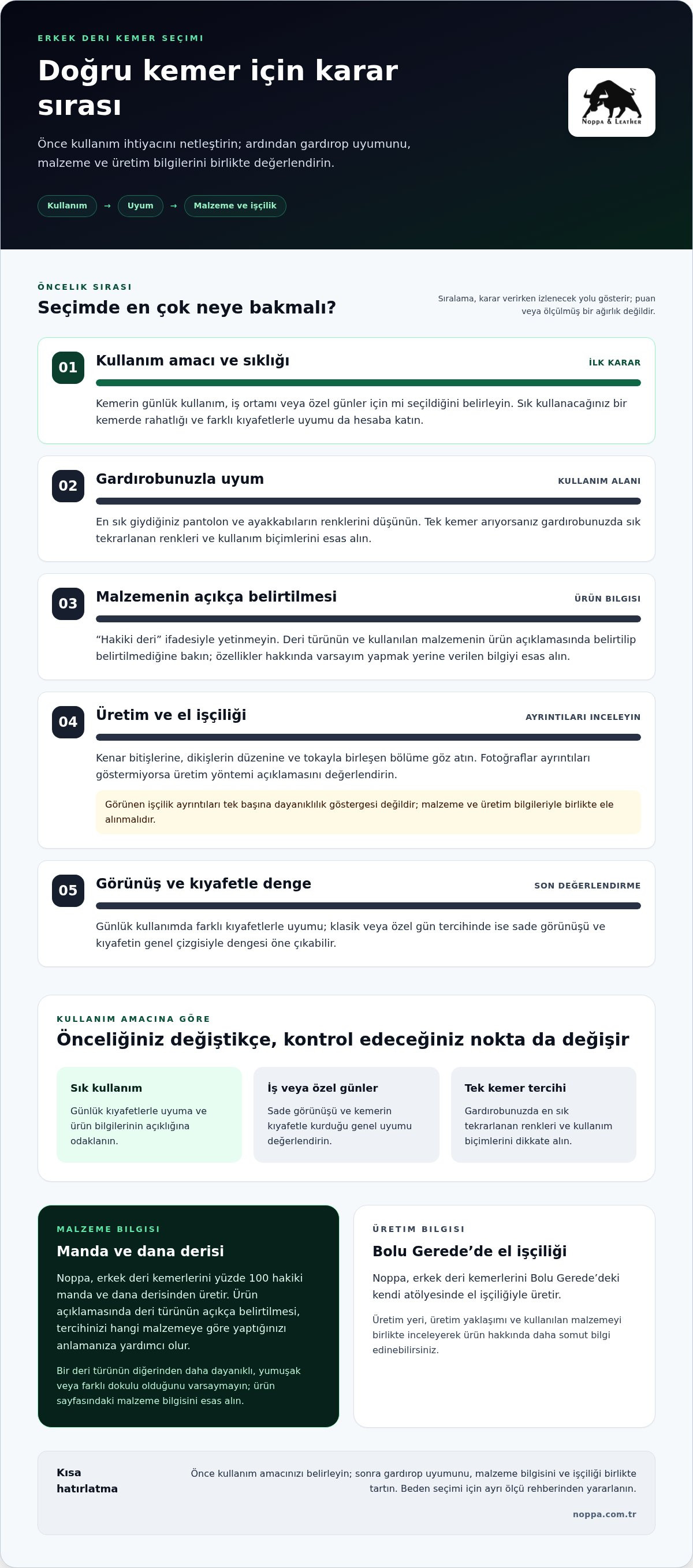
Short decision steps to make choosing a men's leather belt easier
To make deciding between product options easier, put your evaluation in order. First, determine your usage needs, then compare the appearance with your wardrobe. Then read the material and craftsmanship information from the product description. This way, your choice will be based not only on your first impression but also on your daily habits and the concrete information provided about the product.
Pre-purchase checklist
Follow the steps below in order. Each step provides a criterion for the next evaluation. If a product meets some of these criteria but does not provide information about others, do not fill in the missing points with assumptions. Base your decision on the descriptions you have.
- Determine the intended use. Think about whether the belt will be used in everyday life, the workplace, or for more special occasions. Frequency of use will clarify your priorities.
- Assess its appearance. Does its color and overall style match the pants you wear most often? If you want to complement different outfits with a single belt, keep the common colors in your wardrobe in mind.
- Read the material information. Look at whether the leather type is clearly stated in the product description. Do not consider the term "genuine leather" as a quality criterion on its own.
- Examine the craftsmanship description. Look for information about the production location and craftsmanship. Also evaluate the stitching and edge details visible in the product images together with the description.
- Complete the product information. Include the features stated in the description in your decision, but do not guess the unstated size, buckle, or care features. Refer to the separate size guide for size and the genuine leather guide for distinguishing leather types.
Base your decision on the concrete information in the product description
General adjectives such as "high-quality" or "durable" do not show the belt's material or how it is made on their own. Read the material, production location, and craftsmanship descriptions in the product information separately. Do not leave the color choice to preference alone; think about how the belt will look with the pants and shoes you wear most often. If you need details about the belt's style, use the dedicated guide on this topic.
For a final check, ask yourself this question: Does this men's leather belt suit my intended use and the habits in my wardrobe? Does the product description provide enough concrete information for me to make a decision? Once your answers are clear, it will be easier to compare the products using the same criteria.
After following these steps, examine the men's leather belt styles and evaluate the material, craftsmanship, and appearance information together with your own needs.
Noppa men's leather belts: Direct production from the Gerede workshop
When evaluating a belt's material and production information, it is also important to know who the manufacturer is and where the product is made. Noppa produces its leather products by hand in its own workshop in Bolu Gerede. 100% genuine buffalo and cowhide are used in men's leather belts. This information takes product selection out of general quality adjectives and places it on the stated material and production basis.
Workshop production makes it visible who the manufacturer is and where the product is made. Noppa produces its men's leather belts in its own workshop. Instead of assuming details not stated about the production stages, evaluate the stated leather type, craftsmanship information, and production location together. This concrete information will guide your decision together with the belt's appearance and intended use.
Material and workshop approach in Noppa production
Buffalo leather and cowhide are the materials Noppa uses in the production of men's leather belts. This information clearly reveals which leather types are used; it does not mean that there are unstated differences in durability, texture, or usage between the two types. When making your choice, use the material information in the product description as your basis and think about the belt's appearance together with your own wardrobe.
Craftsmanship is part of Noppa's production approach. Production takes place in its own workshop in Bolu Gerede. This information explains where the product is made and what materials are used. There is no need to assume unstated technical stages of the belt's construction or features that are not stated as being in every product. Clearly shared information is a starting point for you to evaluate your choice consciously.
Examine the styles and evaluate the option that suits your usage
When examining the products, keep your intended use in mind. Does the belt's appearance match the clothes you wear most often? Is the material information clearly stated? Does the production location and craftsmanship description support your decision? These questions help you consider the options according to your own needs without focusing on a single feature.
Noppa ships throughout Turkey. Free shipping is offered on orders over 1,500 TL. You can also take this information into account when evaluating your order. Make your product choice based on the belt's material, stated features, and usage expectations. For details that may change, such as price and stock, use the current information on the product page as your basis.
Discover the Noppa men's leather belt styles produced by hand in Gerede; evaluate the material descriptions and product features together with your usage habits.
Clarify your choice according to your daily habits
The next step is to match the options with your own usage routine. Think about which days you wear the belt most often, which pants in your closet you will wear it with, and what you prefer in appearance. This brief assessment allows you to understand whether a model you like really suits your needs. When making a decision, do not get hung up on a single feature; comfortable use, appearance, and the clarity of the product information are all important together.
A good choice depends much more on your own habits than on someone else's outfit recommendation. Therefore, when choosing a men's leather belt, compare the product description with your own priorities and do not make a hasty decision. If the material and craftsmanship details match your criteria, consider how the model will fit into your wardrobe.
Review the information in the product descriptions when browsing Noppa's models and identify the option that seems suitable for your use. Browse Noppa men's leather belt models and consider the option that best suits your daily use.
Frequently Asked Questions
Do leather belts stretch over time?
Yes, leather belts may stretch or change shape over time depending on how they are used and stored. For example, constantly pulling the belt too tight at the same point or leaving it compressed for a long time can affect its shape. The amount of change varies depending on the leather's structure and usage conditions; it is not possible to give an exact stretch measurement for a specific belt. Storing it properly when not in use helps.
How should a leather belt be stored?
Store the leather belt in a clean, dry place away from direct sunlight. Do not place anything on it; do not leave it folded or compressed in a narrow space for a long time. For example, if you keep it in a drawer, place the belt flat; if you hang it, hang it gently without forcing its shape. If there are product-specific care or storage instructions, follow those first instead of general recommendations.
Are leather belts suitable for daily use?
Yes, leather belts can be used for everyday wear; the right choice depends on your frequency of use, your clothes, and the product's stated features. If you plan to wear it often, read the product information and consider the belt's appearance with your everyday trousers. For example, if you mostly wear casual clothes, think about whether the overall look of the belt you choose suits this habit. Do not assume a specific model's performance based on outcomes not included in the product description.
What colors are men's leather belts available in?
Colors such as black and brown are commonly seen in men's leather belts, but the color options for each model may vary. When choosing a color, compare the tones of the trousers and shoes you wear often. Evaluate the colors in Noppa products according to the images and descriptions on the product page. Since screen settings and lighting can affect the tone in the product image, keep in mind that the online image and the actual color may show slight differences.
What should be considered when cleaning a leather belt?
First, remove dust from the surface with a dry, soft cloth. Avoid harsh chemicals, excessive water, and intense heat, as they can damage the leather. If you are considering using a cleaning product, do not apply it directly over a large area; try it on a small, inconspicuous spot first. If there are product-specific care instructions, follow them. Instead of trying an application you are unsure about, refer to the instructions suitable for the belt's material.
Can a leather belt be given as a gift?
Yes, a belt can be a practical gift option. Consider the recipient's everyday style, the colors they wear often, and their need for a belt. For example, if their wardrobe mostly consists of dark tones, a look that complements these colors can be preferred. Size is also important; if possible, find out the size of the belt the recipient uses. Referring to a separate size guide for sizing steps helps reduce the risk of making the wrong choice.
Should I choose a buffalo leather belt or a cowhide leather belt?
Make your choice based on the leather type stated on the product page, the belt's appearance, and your own usage preferences. Noppa uses buffalo and cowhide leather in its men's belts; however, do not conclude a specific texture, flexibility, or durability solely by looking at the leather type. These characteristics may vary depending on how the product is processed. When deciding between the two options, evaluate the information and images in the product description together.