How to Wear a Belt? Guide to the Correct Direction and Usage
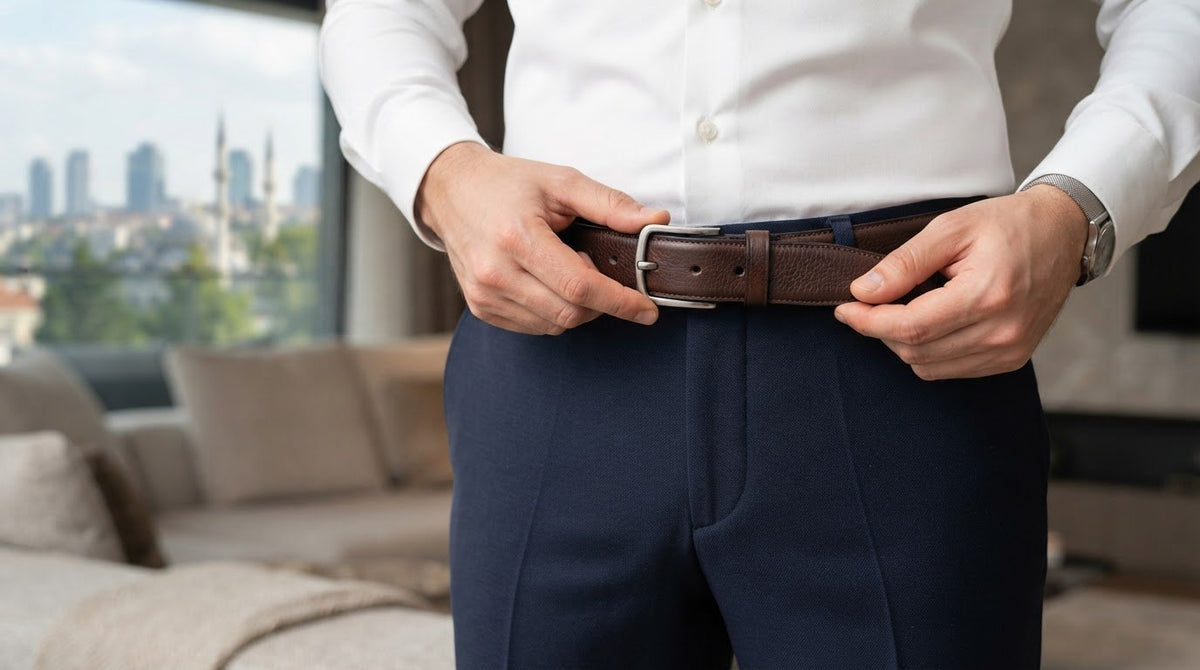
You may not be sure where to start when putting on your pants and threading your belt through the loops. The answer to “How do you put on a belt?” is not just about threading it from the right or left; it is also important that the belt sits comfortably, the buckle closes properly, and the end is neatly positioned. Moreover, there are different traditional explanations regarding the direction of men’s and women’s belts.
First, thread the belt through the pant loops, then close the buckle and arrange the belt end. The belt should stay in place without constricting your waist and should not cause discomfort when sitting or moving. If you experience slipping or tightness during the day, recheck how the strap passes through the loops and the hole you chose.
In this guide, you will learn step by step how to put on the belt in either direction, how to close the buckle, and how to arrange the belt end. We will also explain traditional directional preferences, so you can understand the reason for the different explanations and choose the method that feels most comfortable to you. When you find the right fit, the belt will perform its function and look neat on your pants.
Key Takeaways
- When answering the question of how to put on a belt, it is useful to know the function of the strap, buckle prong, and pant loops.
- By threading the free end of the belt through the loops one by one, you can bring the strap to the buckle without creasing it.
- The direction in which the belt is put on may vary according to habits; there is no single mandatory direction for daily use.
- You can notice tightness and slipping issues by checking the position of the belt while standing and sitting.
- When choosing a belt, consider its intended use, the structure of the pant loops, and the overall look of the outfit.
How do you put on a belt? First, learn the basic parts and its intended use
Knowing the parts of the belt makes it easier to place it properly on your pants. The strap is the long piece that wraps around the waist. There is a buckle at one end; the buckle frame is fixed to the strap. The movable buckle prong inside the frame closes the belt by entering one of the holes on the strap and secures it at the waist. The pant loops help hold the strap around the waist, preventing it from bunching up on the fabric or slipping down.
The basic function of the belt is to hold the pants at the waist. The strap and buckle also complete the look of the outfit. For general information about the parts and intended use of the belt, you can also visit the Belt (clothing) page. The basic use is simple: the strap passes through the pant loops, and the buckle closes at the front.
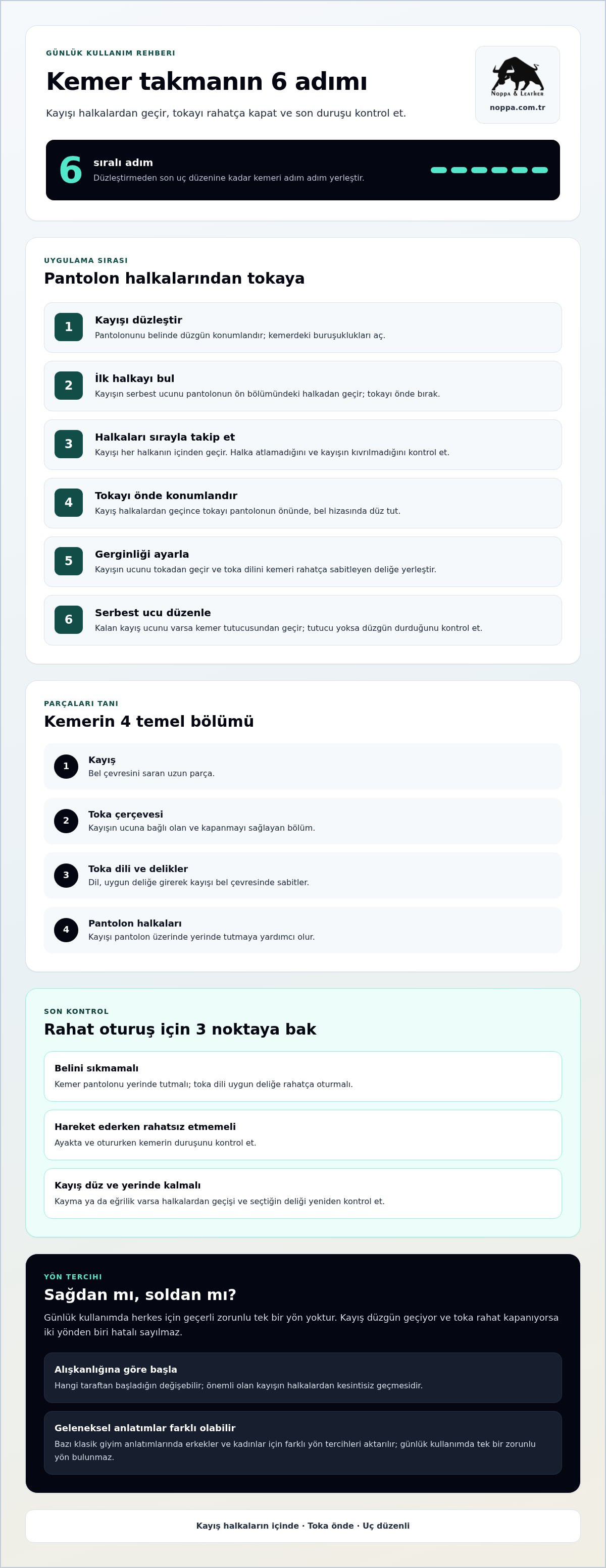
In short, putting on a belt: Thread the strap through the loops at the waist of your pants, position the buckle at the front, and place the buckle prong in a suitable hole. Finally, check that the strap sits straight inside the loops.
Which parts are used when putting on a belt?
The section where the buckle meets the strap allows the belt to close. There are holes on the end of the strap that is not attached to the buckle. When the belt is closed, the buckle prong enters one of these holes and secures the strap around the waist. Choosing the right hole helps the belt sit neither too tight nor too loose. The remaining strap end after the buckle is also kept neat by threading it through the pant loops.
Pant loops are fabric strips sewn along the waistband. The strap passes through these loops to stay in place on the pants. If one loop is skipped, the strap may stick out or sit crookedly around the waist. Therefore, when putting it on, check that both the buckle and the strap pass through all the loops without interruption.
Where does the belt sit on the pants?
The belt is threaded through the loops sewn onto the waistband of the pants. It is not wrapped around the top of the pants or placed under the waistband. As the strap passes through the loops, the buckle sits at the front of the pants, usually near the center of the waist. Depending on the cut of the pants, the buckle may shift slightly to the side; what matters is that the strap stays inside the loops.
In daily and classic dressing, the basic order is the same: thread the free end of the strap through the loops, position the buckle at the front, place the buckle prong in the appropriate hole, and arrange the remaining end. This is the starting point for the question of how to put on a belt. The appearance of the belt may change with the outfit, but the function of the basic parts and the belt's position on the pants remain the same.
How do you put on a belt? Step by step from the pant loops to the buckle
To ensure the belt passes neatly through the loops, the buckle closes comfortably, and the strap end does not remain messy, follow the steps in order. You can put on the belt while wearing the pants and do the final check in the mirror. The strap should pass through the loops without twisting; the buckle should also be in a place where you can easily reach it at the front.
How do you thread the strap through the belt loops?
First, find the loops at the waist of the pants. Thread the free end of the strap that is not attached to the buckle through one of the loops at the front, then advance it around the pants through the next loops. Keep the strap straight while pulling it; check that it does not fold over itself and that you do not skip any loops. The side you start from may vary. What matters is that the strap passes through the loops without interruption.
- Straighten the strap. Position your pants properly at your waist, then unroll and straighten the strap if there are any creases in the belt.
- Find the first loop. Thread the free end of the strap through the loop at the front of the pants. Advance the strap so that the buckle remains at the front.
- Follow the loops in order. Thread the strap through each loop. Make sure you do not skip over the top or bottom of a loop.
- Position the buckle at the front. Once the strap has passed through the loops, place the buckle at the front of the pants so that it sits straight at the waistline.
- Adjust the tension. Thread the free end of the strap through the buckle and place the buckle prong in the appropriate hole.
- Arrange the end. Thread the remaining strap end through the belt keeper on the pants. If there is no keeper, check that the end sits neatly.
How do you close the buckle and arrange the belt end?
Do not pull the strap hard when inserting the buckle prong into the hole. First, align the belt with your waist, then place the prong in the hole that secures the strap comfortably. The belt should hold the pants in place, but it should not constrict your waist. Also check whether it causes discomfort when sitting. If the strap is sitting crookedly, open the buckle and correct its passage through the loops; do not bend the strap to increase the tension.
The end remaining after the buckle is the final detail that tidies up the look. If available, thread it through the belt keeper to prevent it from swinging freely. If the end does not reach the keeper, the belt may be fastened too tightly. For different clothing suggestions regarding belt selection and use, you can visit the belt use and clothing suggestions page.
After applying these steps once, putting on a belt becomes a quick and easy habit. Noppa's genuine buffalo and cowhide belts are handcrafted in the workshop in Gerede. You can review the handcrafted leather belts and choose a model suitable for daily use.
In which direction is the belt put on? The answer behind the different customs
You may encounter different explanations regarding whether the belt is threaded from the right or left. In daily use, there is no single mandatory direction that applies to everyone. If the belt passes neatly through the loops, the buckle closes comfortably, and the strap sits neatly around your waist, neither direction is considered wrong. The choice of direction mostly depends on habit and the movement that feels comfortable to you when putting on the belt.
From which side do you start threading the belt?
In some classic dressing explanations, it is stated that men thread the belt from the left side and leave the strap end to the left, while women put it on in the opposite direction. These are traditional ways of use, not rules that everyone must follow. Others may prefer to start from the right side. If the pant loops and buckle allow the belt to close properly in both directions, you can use the direction that feels comfortable to you.
If the terms right and left cause confusion, use your own body's orientation as a reference when putting on the belt. When you put on your pants, the right and left you see in the mirror may be opposite to the direction of a person looking from the front. What matters is that you can thread the strap through the loops comfortably. If the end of the belt does not bend, the buckle sits straight at the front, and the strap stays neat in the keeper, there is no need to change the direction.
Is the belt direction different for women and men?
Although different directional habits are explained for women's and men's belts, this distinction should not be considered a universal standard. A person's accustomed direction, which hand they move more comfortably with, and the placement of the loops at the waist of the pants can influence the preference. The same person may also find it easier to thread the belt from a different side on different pants.
In practice, the following short check is sufficient:
- Does the strap pass through the loops without getting caught?
- Does the buckle sit comfortably and straight in front of the waist?
- When the belt is closed, does the strap not twist and not constrict the waist?
- Does the free end sit neatly in the belt keeper?
If the answers to these questions are positive, it means your preferred direction is performing its function. In terms of appearance, balancing the buckle and arranging the strap end is more decisive than starting from the right or left. The clearest answer to the question of how to put on a belt in terms of direction is to choose the direction that closes comfortably and neatly. Consider traditional explanations as habits; prioritize your comfort and the belt's appearance on the outfit in daily use.
Wearing the belt comfortably: tension, buckle, and neat finish
The correct closing of the belt alone is not enough. It should also feel comfortable while standing, walking, and sitting; it should not press on the waist while holding the pants. After putting on your belt, look at the position of the strap in the mirror, then sit down and check the buckle and the tension around the waist. A belt that looks neat while standing may cause discomfort when sitting.
How is the tension of the belt checked?
The belt should sit firmly enough to hold the pants at the waist, but it should not prevent you from breathing or moving comfortably. If the buckle digs into your stomach or the strap constricts your waist when you sit, open the belt and put it in a more comfortable hole. If the buckle shifts to the side, first correct the position of the pants and the alignment of the strap in the loops, then close the belt again.
You can perform the check with a few simple movements:
- While standing: Check whether the strap is straight around the waist and the pants are in place.
- While sitting: See if the buckle is applying pressure and if you can breathe comfortably.
- While moving: Observe whether the belt twists or comes out of the loops.
- When checking the closure: See whether the buckle prong fits fully into the hole and the strap stays in place.
How do you arrange the buckle and the belt end?
Position the buckle at the front of the pants, preferably in the center or near the center. The strap should pass straight through the loops; it should not twist around itself or fold under the fabric. If there is a free end remaining after the buckle, thread it through the belt keeper. This prevents the end from hanging down and creates a neater look at the front of the outfit.
If the free end remains too long and hangs down, it may ruin the look and get caught while moving. First, place the end in the belt keeper. If there is no keeper, check that the strap passes neatly through the pant loops; if there is excess length or looseness, re-evaluate the fit of the belt. The answer to the question of how to put on a belt regarding comfort also emerges here: the strap should be straight, the buckle balanced, and the tension comfortable.
Troubleshooting: If the belt is tight, open the buckle and thread it through a more comfortable hole. If the strap slips, check its tension and the fit of the buckle prong in the hole. If the belt twists or creases, open the buckle, straighten the strap along the loops, and close it again. If the belt end hangs down, put it in the keeper.
For daily use, you can review Noppa's handcrafted leather belts. Noppa belts are handcrafted from genuine buffalo and cowhide in the workshop in Bolu Gerede.
Choose the belt suitable for daily use, and wear it simply
When choosing a belt, first think about which pants and environments you will use it with. A model that fits comfortably in the belt loops of your frequently worn pants and matches the overall look of the outfit will perform its function. For more careful dressing, you can create a balanced look with a plain strap and buckle. The choice does not change the order of putting on the belt; the answer to the question of how to put on a belt is shaped by the pant loops and a comfortable fit.
What is considered when choosing a belt for daily use?
Consider the pants you frequently wear. The strap passing comfortably through the pant loops and the buckle matching the rest of the outfit is a good start. For example, with plain pants, you can consider an understated buckle and easy-to-match colors like brown or black. In more careful dressing, keeping the belt and shoe colors close provides a neat unity; this is not a strict rule in daily combinations.
Depending on the use, the following short comparison may make the choice easier:
| Dressing situation | Focus point in selection | Appearance suggestion |
|---|---|---|
| Daily pants | Comfortable passage through the loops and all-day comfort | Plain, easy-to-match strap and buckle |
| More formal outfit | Harmony with the overall order of the outfit | Understated buckle, color matching the shoes |
| Comfortable, casual combination | Ease of movement and personal preference | More free approach in color and buckle selection |
The suggestions in the table are for appearance and are not mandatory rules. As much as the harmony of the strap with the pant loops, the belt's comfort at the waist is also important. Do not make your choice based on only one outfit; also think about how the belt will look with different daily combinations you frequently use.
About the production of Noppa leather belts
Noppa belts are handcrafted in the workshop in Bolu Gerede. Genuine buffalo and cowhide are used in production. If you value the quality of the material when choosing a belt, you can also consider this production information. Let your usage habits and the harmony the belt creates with your outfits be the deciding factor in your preference.
For daily use or more formal combinations, you can review the Noppa leather belt options and discover the models prepared by hand from genuine buffalo and cowhide in Gerede.
Complete your belt selection with your own dressing style
Belt use naturally becomes part of your personal dressing habits over time. When adding a new belt to your wardrobe, think of it not only with a single outfit but also with different combinations you frequently prefer. This way, you can better evaluate the place of the color, strap, and buckle in your daily dressing. The answer to the question of how to put on a belt starts with learning the application steps and is completed by making the choice that suits you and in which you feel comfortable.
When choosing a belt, base it on its intended use and your own style. You can create a balanced look with plain pieces or use the belt as one of the standout details of your outfit. Pay attention to the texture of the leather, the craftsmanship, and the harmony of the belt with the pieces in your wardrobe.
You can discover the genuine buffalo and cowhide belt options prepared by hand in Noppa's workshop in Bolu Gerede by reviewing the Noppa belt options. When you find the belt that suits you, completing your combinations according to your own line will be easier.
Frequently Asked Questions
Should the belt buckle be aligned with the button of the pants?
When the buckle sits at the front of the pants, as close to the center as possible, the look is balanced; it is not mandatory to be perfectly aligned with the button. On pants with loops placed to the side, the buckle may shift slightly. First, check that the belt closes comfortably, then straighten the pants at the waist and bring the buckle to a balanced position by sliding the strap inside the loops. Do not constrict the belt excessively in a way that disrupts comfort.
Can a belt be used on pants without belt loops?
On pants without belt loops, it may be difficult for the strap to stay in place; especially when bending over or standing up, the belt may shift. The structure and cut of the pants also affect the position. It may be more comfortable to use such pants without a belt. If you choose to put on a belt, make sure the pants' own closure sits properly. Then sit down and stand up to observe whether the strap slips or restricts your movement.
How should the buckle fit into the hole?
The buckle prong should fit into the hole that secures the belt enough to hold the pants in place and does not bother your waist. When thinking about how to put on a belt, do not decide based only on your standing position. After closing the buckle, sit down, stand up, and take a few steps. If you feel pressure on your waist while moving, try a more comfortable hole. If the belt loosens while walking or the pants slip down, choose a more secure hole instead of forcing the strap to tighten.
Is the belt end threaded through the buckle?
Before the pant loops, you thread the buckle end of the belt, not the free end of the strap; the buckle remains at the front. Then you thread the free end through the buckle and place the buckle prong in the appropriate hole. The closing direction may vary according to habit, so it is not mandatory to put it on in a single direction. For example, if using your left hand feels more comfortable starting from the other side, you can proceed that way. Finally, check that the strap is not bent and sits firmly on the buckle.
What is done if there is no belt hole?
How a belt without a hole closes depends on the buckle mechanism. A classic buckle prong fits into a hole on the strap; buckles with different closing mechanisms may grip the strap in another way. First, examine the belt's existing connection point and use the mechanism without forcing it. Making a hole haphazardly may ruin the structure of the strap or affect its harmony with the buckle. If the closing method is not understood, base it on the product's usage information instead of forcing the belt to close.
Why does a belt strap twist and curl when you put it on?
The strap often twists when it is not threaded evenly through the loops or when it shifts along with your trousers while dressing. Open the buckle, release the strap, straighten the twist, and rethread it through each loop so that the same side of the strap faces outward. If the waistband of your trousers is wrinkled, smooth the trousers first. If the strap continues to twist after the buckle is fastened, recheck how it is threaded through the loops instead of pulling it too tight.
How do you manage a belt that is too long?
After fastening the buckle, threading the remaining long end through the belt loop on your trousers reduces sagging and the chance of it catching on something. If the end still looks long, do not cut the belt immediately. How the strap is attached to the buckle and the construction of the belt determine whether it is suitable for cutting; an incorrect cut can leave a permanent mark. First, try the belt with different trousers and see where the strap naturally rests. Neatly position the unused part inside the loop.
To discover belts made by hand in Gerede from genuine buffalo and cowhide that are suitable for everyday use, browse Noppa belt options.